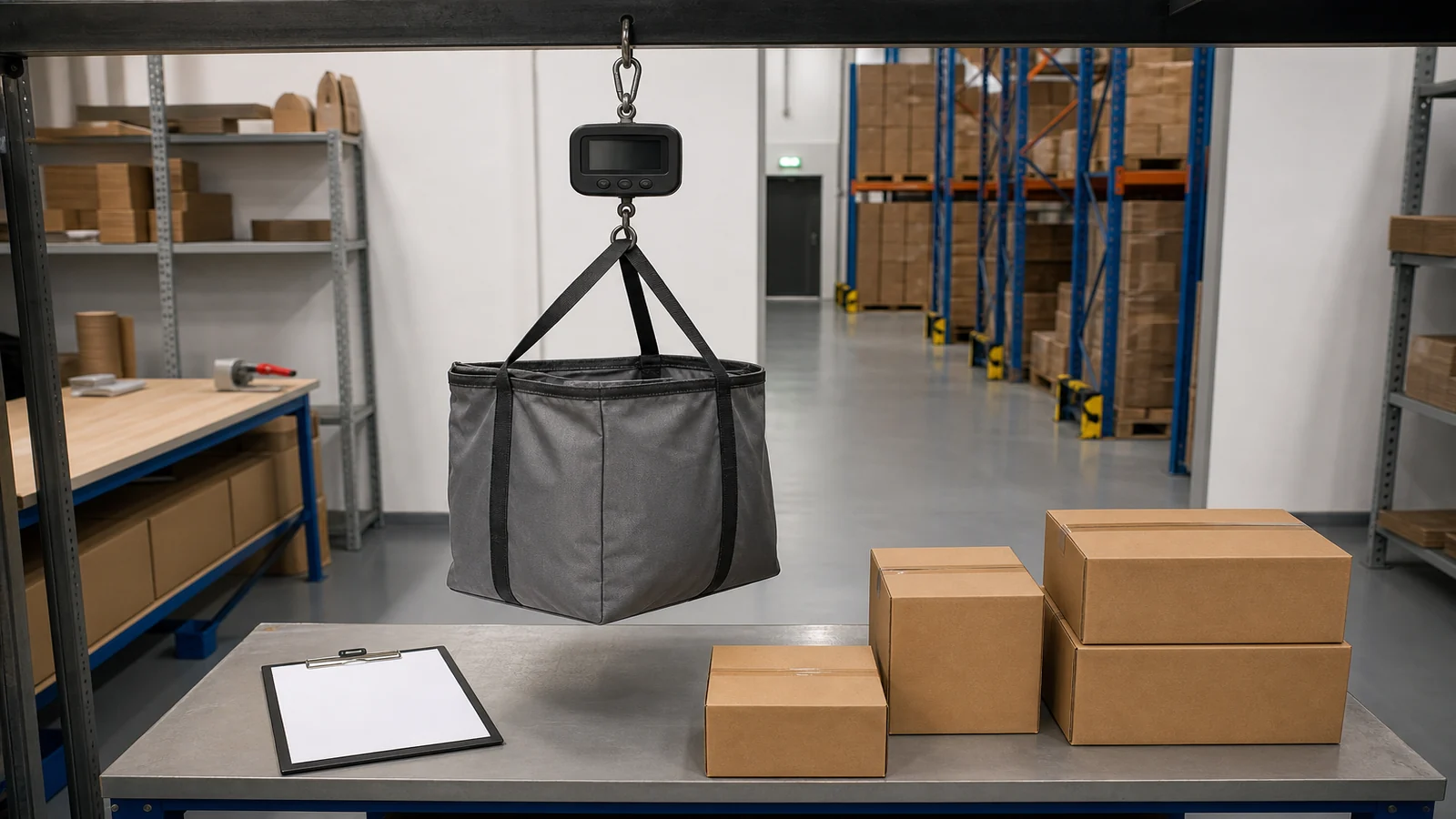
Warehouse Parcel Weighing Checklist: Keep Tote Weights Repeatable
A warehouse parcel weighing checklist works when goods sit in a reusable tote or bag that can hang freely, the hanging point is fixed, and one person records after the display settles. It does not replace a platform for rigid cartons that should stay on a bench, and it does not create a carrier-accepted invoice weight. Treat the hanging scale as a process tool for tote streams, not as proof for billing disputes.
Which parcel types are suitable for hanging weighing?
Soft bags, mail sacks, and mixed small items in a fabric tote are the usual fit. Long rigid boxes, leaking liquids, and loads that would need two people to lift onto a hook are not. If the parcel must be tilted to fit the hook, it belongs on a platform. Keep the hanging point at a height that does not force overhead lifting.
Avoid hazardous manual handling where practicable and assess unavoidable handling tasks, as set out in HSE manual handling at work. A hanging scale does not make a heavy carton lighter; it only changes how you read the weight.
How should we use tare with reusable totes?
Tare the empty tote on the same hook, with the same strap, at the start of the shift and after the tote is swapped. Write the tote identity on the record if several bags look alike. Do not tare a wet tote and then weigh a dry one. Tare does not add capacity: gross weight still includes bag, strap and goods, and that total must stay inside the scale and attachment limits.
If staff are unsure whether to press tare or hold, use the companion note on tare vs hold on a hanging scale rather than inventing a house shortcut.
What sequence reduces recording mistakes?
Use this checklist at one labelled station.
- Check the hook, strap and tote for cuts, stretched stitching or a bent gate.
- Confirm the hanging point and that the floor under the tote is clear.
- Tare the empty tote, or confirm the stored tare still matches this bag.
- Load the tote on the bench, then hang it. Do not load while it dangles.
- Wait until the tote is still and the digits stop changing, then record once.
- Lower the tote to the bench before anyone reaches inside.
- If the figure looks impossible next to similar jobs, re-tare and repeat rather than editing the sheet.
HSE guidance on selecting, positioning, using and examining lifting equipment safely is in Lifting equipment at work: A brief guide. Position the scale so staff read from the side, not from under the tote.
How do we deal with swinging or awkward parcels?
Stop the swing with a still tote and a short drop, not with a hand on the load. Awkward shapes that catch the bench need a different bag or a platform. Do not ask someone to hug the parcel to damp it. If two items in one tote shift and the display hunts, split the load.
When is a platform scale the better alternative?
Use a platform when cartons must stay square, when you need a large stable platter, or when hanging would force a lift above shoulder height. Mixed dispatch lines often need both: hanging for sacks, platform for boxes. Do not promise that either figure will match a carrier's billed weight.
A compact crane-style indicator such as the Soldestati 300kg digital crane scale only helps if the station already has a sound hanging point and a tote that hangs freely.
When should staff stop and escalate a weighing task?
Stop if the tote, strap or hook is damaged. Stop if the parcel keeps swinging or the display will not settle. Escalate when the load exceeds the posted limit, when liquid leaks, or when someone would have to stand under the tote to read the screen. Supervisors should take the station out of use until the attachment is replaced.
Who this dispatch method is not for
This article is not for legal-for-trade sales by weight. This article is not for staff who would have to lift oversized cartons overhead to hang them. It is also the wrong method for a single shared hook in a walkway, and for night shifts with no spare tote when the first bag is wet.
When the job should stop
If the only way to finish the wave is to ignore a hunting display, pause the line. A missed scan is cheaper than a dropped tote. Keep weighing as a quiet, repeatable station task, not a rush job at the van door.
Shift handover is where tote weighing usually drifts. Leave the empty bag on a labelled hook, write the tare time on the sheet, and tell the next person if the floor was wet. A tote that sat on a damp slab picks up mass that looks like extra parcels. If the hanging point is a shared beam with another process, tape a keep-clear box on the floor so pallet trucks do not clip a hanging sack.
Train one person as the station owner for the week so button habits do not fork. If agency staff arrive, walk them through one empty hang before live work. Do not let a van driver tare at the door on a different hook and then compare figures with the warehouse sheet. When a tote zipper fails, quarantine that bag rather than tying it with stretch wrap, which changes the empty weight and can slip on the hook.
Keep a small log of impossible readings: a tote that comes in lighter than the empty tare, or heavier than the scale class. Those rows are process faults. Investigate the bag, the tare, and whether someone added a second strap. Do not silently correct the number to match an expected courier band. If management wants a second check, use the platform for that carton family instead of hanging the same box twice at different heights.